
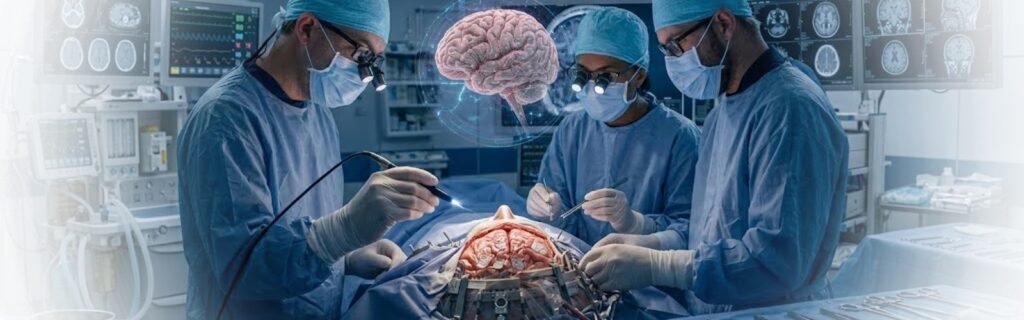
It sounds like something from a medical thriller — a patient lying on an operating table, wide awake, answering questions and moving their fingers while a neurosurgeon removes a tumour from their brain. Yet awake brain surgery is not only real, it is one of the most sophisticated and patient-protective procedures in modern neurosurgery. Far from being a frightening ordeal, it is a carefully choreographed, compassionate process designed with one goal above all others: keeping you neurologically intact.
What Is Awake Brain Surgery?
Awake brain surgery, medically referred to as awake craniotomy, is a specialized neurosurgical technique in which a patient remains conscious during certain portions of brain tumor removal. The goal is to safely remove abnormal tissue while continuously monitoring the patient’s neurological functions.
The patient is given mild sedation to reduce anxiety. Then, a scalp block is performed where the pain-carrying nerves of the scalp and skull are made numb with injections. This ensures the patient experiences little or no discomfort while access to the brain is created. Sedation is then reduced so the patient can respond to simple instructions from the surgical team.
Importantly, the brain itself does not contain pain receptors. This means that while the patient may be aware during part of the procedure, they do not feel pain from the surgery on the brain.
Why Do Patients Stay Awake During Brain Surgery?
The human brain contains specialized regions responsible for essential functions like speaking, understanding language, moving limbs, and processing sensory information. When tumors develop near these “eloquent areas,” removing them without monitoring function can risk permanent disability.
Keeping the patient awake allows surgeons to test these functions during the operation. For example, the patient may be asked to:
- Count numbers
- Name objects shown on a screen
- Move their fingers or toes
- Read short sentences aloud
If stimulation of a specific brain area interferes with speech or movement, surgeons immediately recognize that this region must be preserved.
This process is known as awake brain mapping surgery, where small electrical impulses help identify functional areas of the brain. Mapping ensures that surgeons remove as much tumor as possible without harming vital brain networks.
“The patient is not a passive participant in awake craniotomy. They are, in many ways, the most important member of the surgical team in the room.”
Conditions That May Require Awake Brain Surgery
Awake brain surgery is not performed for every brain tumor. It is typically recommended when tumors are located near areas controlling critical neurological functions.
Common indications include:
- Brain tumors near speech centers
- Tumors close to motor areas controlling limb movement
- Low-grade gliomas affecting functional brain regions
- Certain epilepsy surgeries
By carefully mapping the brain during surgery, doctors can balance two important goals: removing the tumor effectively while preserving the patient’s quality of life.
Is Awake Brain Surgery Safe?
Modern advances in anesthesia, imaging, and neurosurgical techniques have made awake brain surgery both safe and highly effective. Patients are closely monitored throughout the procedure by a specialized team that includes neurosurgeons, anesthesiologists, neurologists, and neuropsychologists.
Comfort is carefully managed using sedation, local anesthesia, and supportive monitoring. Many patients report that the experience is far less uncomfortable than they initially expected.
The greatest advantage of this technique is its ability to reduce the risk of post-surgical neurological deficits. By directly observing how the brain responds during surgery, surgeons can avoid damaging critical areas responsible for speech or movement.
Recovery After Awake Brain Surgery
Recovery varies depending on the type of tumor, the extent of surgery, and the patient’s overall health. However, many patients recover surprisingly well.
Common aspects of recovery include:
- Early mobilization within a day or two
- Short hospital stays in many cases
- Gradual return to normal activities
- Possible speech or physical therapy if needed
Because brain function is actively protected during the procedure, patients often retain their ability to speak, move, and think clearly after surgery.
Addressing Common Concerns
Many patients initially feel anxious about the idea of being awake during brain surgery. However, understanding the purpose behind the technique often brings reassurance.
Patients are not left alone during the procedure. The surgical team communicates continuously, ensuring comfort and support. The awake portion typically lasts only as long as necessary to test brain function.
In fact, many patients later describe the experience as empowering, knowing they actively helped surgeons protect their brain functions.
Conclusion
Awake brain surgery represents one of the most remarkable advances in modern neurosurgery. By allowing real-time monitoring of speech, movement, and cognitive functions, surgeons can safely remove tumors while preserving the abilities that define daily life.
Although the idea of being awake during brain surgery may seem daunting, the technique is carefully designed to protect the brain and improve surgical outcomes.
If you or a loved one has been diagnosed with a brain tumor located near critical brain areas, expert evaluation is essential. For advanced brain tumor care and personalized treatment planning, consult Dr. Rajesh Reddy Sannareddy, Senior Consultant in Brain, Spine & Endovascular Neurosurgery. Early consultation can help ensure the safest and most effective treatment approach.