
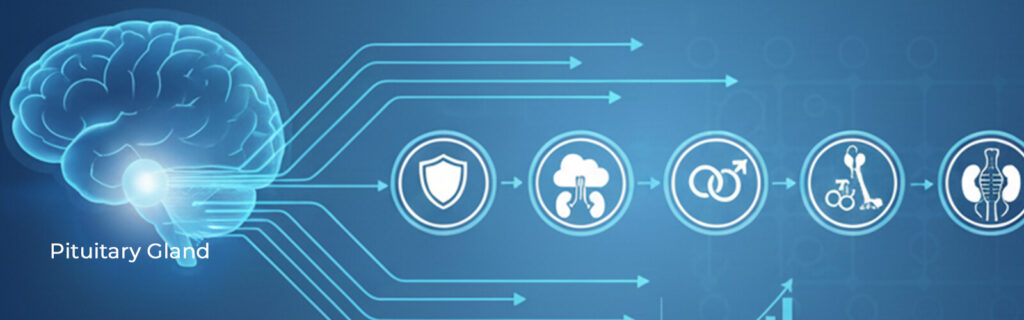
The human body functions like a finely tuned orchestra, with each organ playing a specific role in harmony. At the center of this complex performance stands a small but powerful structure—the pituitary gland. Though tiny in size, it acts as the chief conductor, ensuring that multiple systems of the body work together in balance.
Often referred to as the Master gland of the body, the pituitary does far more than regulate itself. It coordinates growth, metabolism, stress response, reproduction, and water balance—making it one of the most influential organs in the human body.
What Is the Pituitary Gland?
The pituitary gland is a pea-sized structure located at the base of the brain, behind the bridge of the nose. It sits in a protective bony cavity called the sella turcica and is closely connected to the hypothalamus, the brain’s key regulatory center.
This strategic location allows the pituitary to receive signals from the brain and convert them into hormonal instructions that travel throughout the body.
Why Is It Called the Maestro of the Body?
Just as a maestro guides musicians to create harmony, the pituitary gland directs several other hormone-producing glands, including the thyroid, adrenal glands, ovaries, and testes. By controlling these glands, the pituitary maintains internal balance—also known as homeostasis.
Any disturbance in its function can lead to widespread effects, proving how central its role truly is.
Hormones That Drive the Body’s Rhythm
The pituitary gland has two parts—anterior and posterior—each releasing specific hormones. Together, these pituitary gland hormones regulate nearly every essential body function.
Anterior Pituitary Hormones
- Growth Hormone (GH): Influences height, muscle mass, and bone strength
- Thyroid-Stimulating Hormone (TSH): Regulates metabolism and energy levels
- Adrenocorticotropic Hormone (ACTH): Controls stress response through cortisol release
- Prolactin: Supports milk production
- LH & FSH: Regulate reproductive health and fertility
Posterior Pituitary Hormones
- Antidiuretic Hormone (ADH): Maintains water balance and blood pressure
- Oxytocin: Plays a role in childbirth, bonding, and emotional regulation
Through these hormones, the pituitary influences physical growth, emotional well-being, and the body’s ability to adapt to stress.
When the Maestro Falls Out of Sync
Because the pituitary oversees so many systems, even small abnormalities can cause noticeable symptoms.
Pituitary Tumors
Most pituitary tumors are benign, but they can disrupt hormone production or compress nearby structures. Symptoms may include headaches, vision disturbances, unexplained fatigue, and hormonal imbalances.
Hormonal Disorders
Imbalances can result in conditions such as:
- Excess growth hormone leading to abnormal tissue growth
- Excess cortisol causing weight gain and fatigue
- Hormone deficiency resulting in weakness, infertility, or low energy
Excess Prolactin (Hyperprolactinemia):
When the pituitary produces too much prolactin, it can lead to irregular or absent menstrual cycles, infertility, and milk discharge from the breasts even when not breastfeeding. In men, excess prolactin may cause reduced libido, erectile dysfunction, and infertility. In some cases, patients may also experience headaches or vision problems if the pituitary gland enlarges and presses on nearby structures.
Early recognition and appropriate treatment of these hormonal imbalances can significantly improve quality of life and prevent long-term complications.
Diabetes Insipidius
A condition caused by ADH deficiency, leading to excessive thirst and frequent urination.
Impact on Daily Life
Pituitary disorders often develop slowly and may mimic common conditions like stress or aging. People may experience:
- Persistent tiredness
- Sudden weight changes
- Menstrual irregularities
- Mood changes or depression
- Vision problems
Because symptoms are often subtle, awareness and early evaluation are crucial.
Diagnosis and Treatment
Diagnosing pituitary conditions typically involves:
- Blood tests to assess hormone levels
- MRI scans of the brain
- Vision field testing
Treatment depends on the condition and may include medications, hormone replacement, or minimally invasive/endoscopic surgery. With modern medical advances, most pituitary disorders can be managed effectively when diagnosed early.
Conclusion
The pituitary gland may be small, but its influence is enormous. Acting as the body’s maestro, it ensures harmony across growth, metabolism, reproduction, and emotional health. When functioning properly, it keeps the body in balance; when disrupted, it can affect multiple systems at once.
If you experience unexplained hormonal symptoms, persistent headaches, or vision changes, early expert evaluation is essential.
For comprehensive diagnosis and advanced management of pituitary and other neurological conditions, consult Dr. Rajesh Reddy Sannareddy, Senior Consultant in Brain, Spine & Endovascular Neurosurgery.