
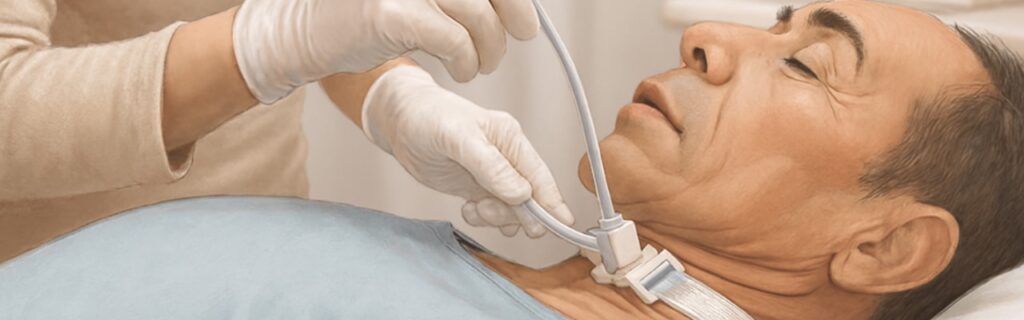
When a patient sustains a severe brain or spinal cord injury, recovery often feels like an uphill journey — marked by uncertainty, dependence, and fragile progress. Among the many medical interventions that support healing, tracheostomy stands out as a pivotal procedure that can drastically improve outcomes in neurorehabilitation. Far from being just a breathing aid, it plays a critical role in stabilizing patients, enabling early rehabilitation, and supporting a safer, faster return to independence.
Understanding the Role of a Tracheostomy
A tracheostomy is a surgical procedure that creates an opening in the neck to insert a tube directly into the windpipe (trachea). This allows the patient to breathe without using the nose or mouth, reducing airway resistance and facilitating better oxygen exchange.
In patients with brain or spine injuries, breathing may become difficult due to neurological damage affecting respiratory control or muscle coordination. Here, a tracheostomy becomes not just a life-sustaining measure but a bridge toward recovery — stabilizing breathing while freeing the patient from the discomfort and risks of prolonged intubation.
From Life Support to Recovery Support
Many neurocritical patients initially rely on mechanical ventilators to breathe. While these machines are essential in the acute phase, long-term ventilation through an endotracheal tube can cause throat injury, infections, and discomfort. A tracheostomy offers a safer, more sustainable solution.
Once a patient undergoes the procedure, the process of neurorehabilitation after tracheostomy can begin more effectively. With improved airway management, patients are often able to participate in physical therapy, cognitive exercises, and communication training earlier — accelerating neurological recovery.
Enhanced Comfort and Reduced Complications
The benefits of a tracheostomy extend beyond survival. It significantly enhances patient comfort and reduces complications that can derail rehabilitation. Patients can swallow, speak (with a speaking valve), and maintain oral hygiene more easily.
This improvement in comfort not only supports physical recovery but also reduces psychological stress, an often-overlooked factor in long-term neurological healing. For families and caregivers, it also provides reassurance — knowing that their loved one can breathe safely and communicate basic needs.
The Neurological Edge: Breathing, Brain, and Healing
The connection between respiratory efficiency and brain function is deeper than many realize. Adequate oxygen supply is essential for neuronal health and repair. In neurological patients, stable breathing through a tracheostomy helps maintain optimal oxygen levels in the brain and spinal cord, which is vital for tissue recovery.
Moreover, improved oxygenation supports better sleep patterns, mood stability, and cognitive clarity — all crucial for regaining neurological function. This makes the role of tracheostomy in spinal cord injury recovery not merely supportive but transformative.
Step-by-Step Progress in Rehabilitation
Tracheostomy opens the door to a structured, stepwise approach to rehabilitation. Initially, the focus is on maintaining respiratory stability and preventing infections. As the patient grows stronger, respiratory therapists and physiotherapists introduce breathing exercises, mobility training, and weaning protocols.
Weaning from the tracheostomy — the gradual process of teaching the body to breathe independently again — marks one of the most empowering milestones in recovery. For many patients, successful tracheostomy weaning in brain injury recovery symbolizes not just physical healing but emotional renewal — the moment they begin to reclaim control over their lives.
Multidisciplinary Care: The Heart of Successful Rehabilitation
Effective tracheostomy rehabilitation is always a team effort. Neurologists, neurosurgeons, critical care specialists, respiratory therapists, physiotherapists, and speech-language pathologists all play integral roles.
Together, they design an individualized rehabilitation plan that balances respiratory support with neurological recovery. Speech therapists help restore communication; physiotherapists improve strength and mobility; occupational therapists guide daily function. This multidisciplinary coordination transforms tracheostomy from a life-saving device into a tool for life rebuilding.
Beyond the ICU: Transitioning to Independence
As the patient transitions out of intensive care, rehabilitation continues in specialized neurorehab units. Here, the focus shifts from medical management to functional independence — breathing without support, regaining muscle strength, and re-establishing balance and coordination.
With time, the tracheostomy tube may be removed (a process called decannulation), marking another major victory. The ability to breathe, speak, and eat normally again represents a profound psychological boost — often reigniting hope for full recovery.
Empowering Recovery, Restoring Life
Tracheostomy isn’t merely a medical intervention; it’s a turning point that enables recovery to begin when all else seems uncertain. It gives patients the chance to participate in therapy earlier, prevents complications, and ensures that the path to rehabilitation is smoother and more effective.
Through advances in airway management and rehabilitation techniques, tracheostomy continues to redefine the limits of what’s possible in spine injury rehabilitation care. Every successful recovery story is a testament to how science, compassion, and multidisciplinary care can work together to restore life — breath by breath.
At the intersection of advanced neurosurgery and compassionate care, Dr. Rajesh Reddy Sannareddy specializes in guiding patients through complex neurological recoveries — from critical care to full rehabilitation.
If you or your loved one is navigating brain or spine injury recovery, expert tracheostomy management and personalized neurorehabilitation can make all the difference.
Book a consultation today and take the next step toward confident, independent healing.